Bale Processing Equipment and Hydration:
Maximizing the Performance of High-Quality Growing Media
Author: Stacey Rocklin and Annie Girard
In professional greenhouse production, the journey from substrate to a thriving crop is shaped by countless decisions. Among these, the choice and setup of bale processing equipment plays a pivotal role in determining how effectively growing media is hydrated and prepared to support crop development. While often overlooked, this machinery is the first point of contact with compressed substrates. Its performance directly influences substrate yield and consistency as well as influencing labor efficiency, crop performance, plant quality and consistency of crop growth.
How can these essential components of potting lines influence so much down the line in production?
Let’s explore the nuances of hydration and how high-quality substrates interact with equipment to deliver the best results.
Equipment:
The Role of Bale Processors in Greenhouse Operations
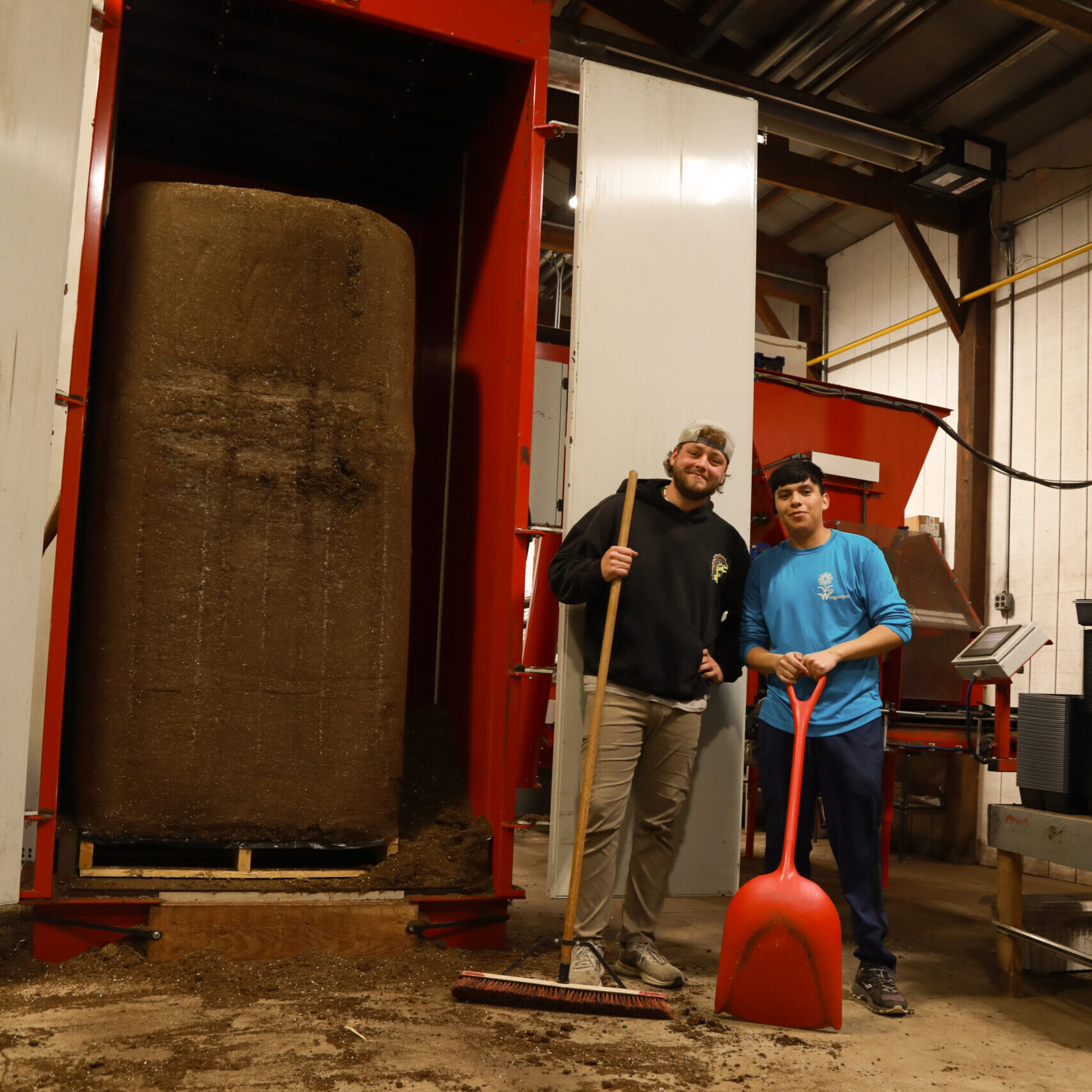
Compressed growing media offers logistical, economic and environmental advantages over loose fill. However, to unlock the full potential of these formats, growers must rely on equipment to fluff and hydrate the substrate before container filling.
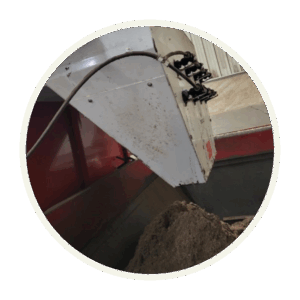
Bale processors come in various designs, including vertical and tilt-style machines. Vertical processors lift the bale and shave it from the top, while tilt processors lean the bale to one side and scrape it from the bottom large side to prepare substrates for optimal container filling. Elevator-type processors have a smaller footprint making them useful in tight spaces, while tilt processors may operate faster, can be mobile, can help blend unevenly hydrated substrates when pre-hydrated towers have not evenly absorbed water.
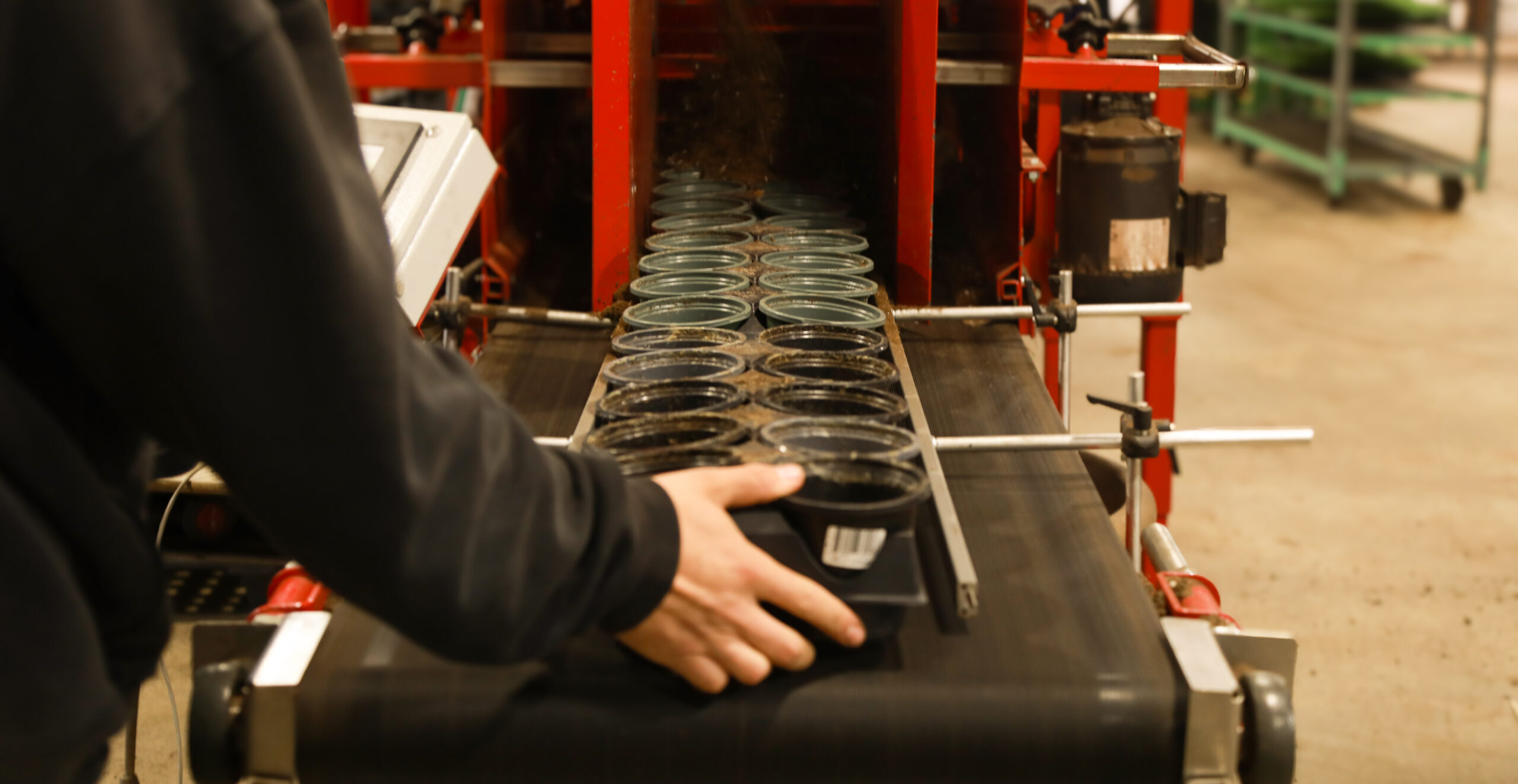
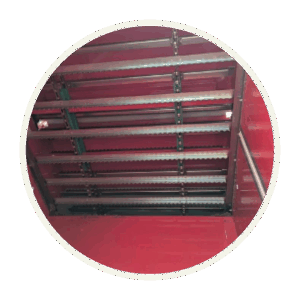
Beyond the processor itself, a complete potting line typically includes conveyors, hydration stations, hopper(s), flat filler, transplanters and a water tunnel at the end. Ideally, substrate moves through these first few stages via conveyors with water bars, gradually absorbing water with peat fibers expanding to become ready for container filling. At each step, the quality of the substrate and the precision of the equipment determine how well the mix will performs in containers.
Hydration:
Differentiating Two Separate but Critical Steps
Initial hydration is the most influential of all variables during filling. Compressed peat-based media require sufficient water to fully expand and achieve their designed physical properties. The second hydration step is the water tunnel after transplant, often taking center stage to the detriment of initial hydration. These two separate steps accomplish very different yet critical tasks.
At initial hydration, experts recommend a minimum hydration time of 20 seconds, with 60 seconds or more being ideal. This can be achieved by incorporating conveyors between the bale processor and hopper. Water bars along these conveyors deliver targeted hydration, while mist heads in the bale processor help reduce dust and begin the expansion process. Using several hydration points ensures better peat expansion than a single, high-flow bar. During initial hydration, approximately half a gallon of water per cubic foot of substrate should be added from starting moisture content of 43-47%. Mix manufacturers can share their moisture content, allowing growers to match this with nozzle size and flow rate to their mix processing speed. For example, high-capacity bale processors require multiple water bars with larger nozzles to keep up with line speed. Without proper initial hydration, growers risk overfilled containers or shrinkage which compromise plant quality and yield.
For more on proper initial hydration watch our video:
Best Practices for Compressed Mixes
How do we know if initial hydration is correct?
The squeeze test (sometimes called the bump method) is a quick and easy way to check if the substrate is ready.
Simply grab a handful of mix, squeeze and release.
- If the mix does not clump, it is too dry.
- If lots of water drips out while squeezing, it is too wet.
- When the mix forms a loose clump and bumps apart easily, it is properly hydrated and ready for pot filling.
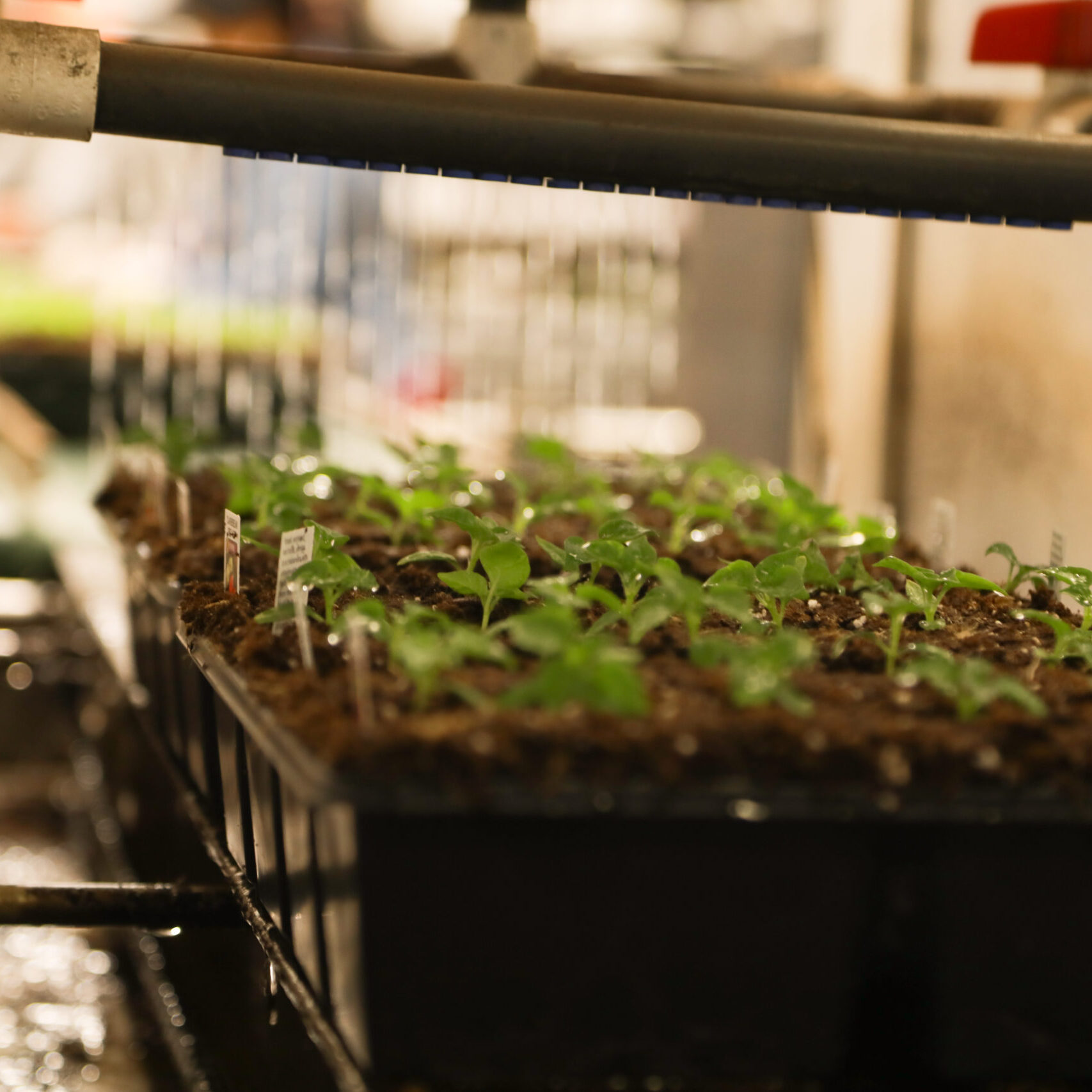
The second hydration step, the water tunnel, is crucial to settle plugs into containers before bumpy rides to the greenhouse. This step is only intended to moisten the top of the substrate, not the entire column of the pot. When too much water is added here to compensate for a lack of initial hydration, that trip to the greenhouse collapses the air space in the mix. This causes headaches for growers throughout the crop in terms of low air exchange to roots and longer dry-down cycles.
To watch a demonstration:
See our Squeeze test video.
Equipment Design and Substrate Integrity
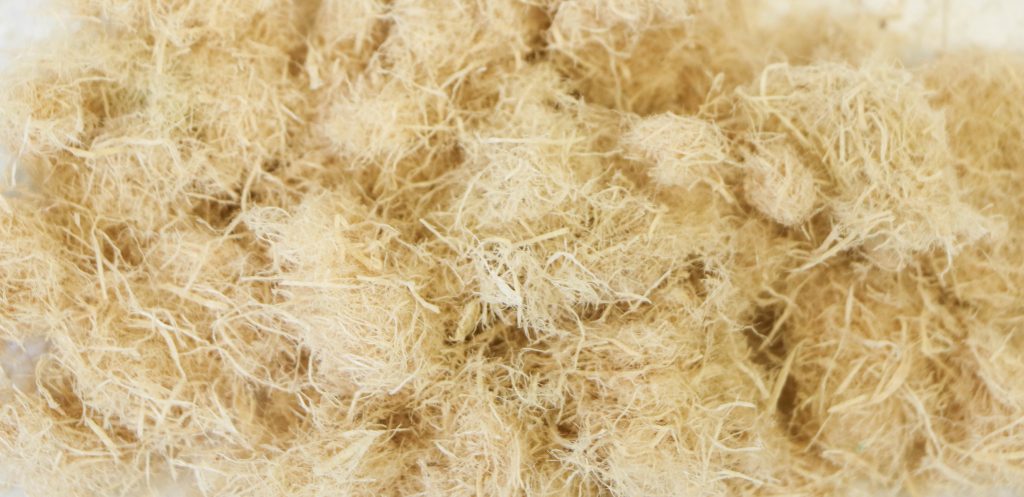
While hydration is key, the physical interaction between equipment and substrate also matters. Peat moss has a delicate mesh-like structure that is excellent for water retention but is prone to breakage with metal-on-metal contact. This breaks down peat particle size, reducing the substrate’s yield and growers’ ability to properly set up air space in containers.
Equipment manufacturers address this through designs that minimize abrasion, like by placing chains toward outside edges of processors or using nylon strips to reduce metal-on-metal friction. Growers preserve physical properties by adopting best practices that minimize recirculation and turn off augers when the line is stopped.
Common Pitfalls and Troubleshooting
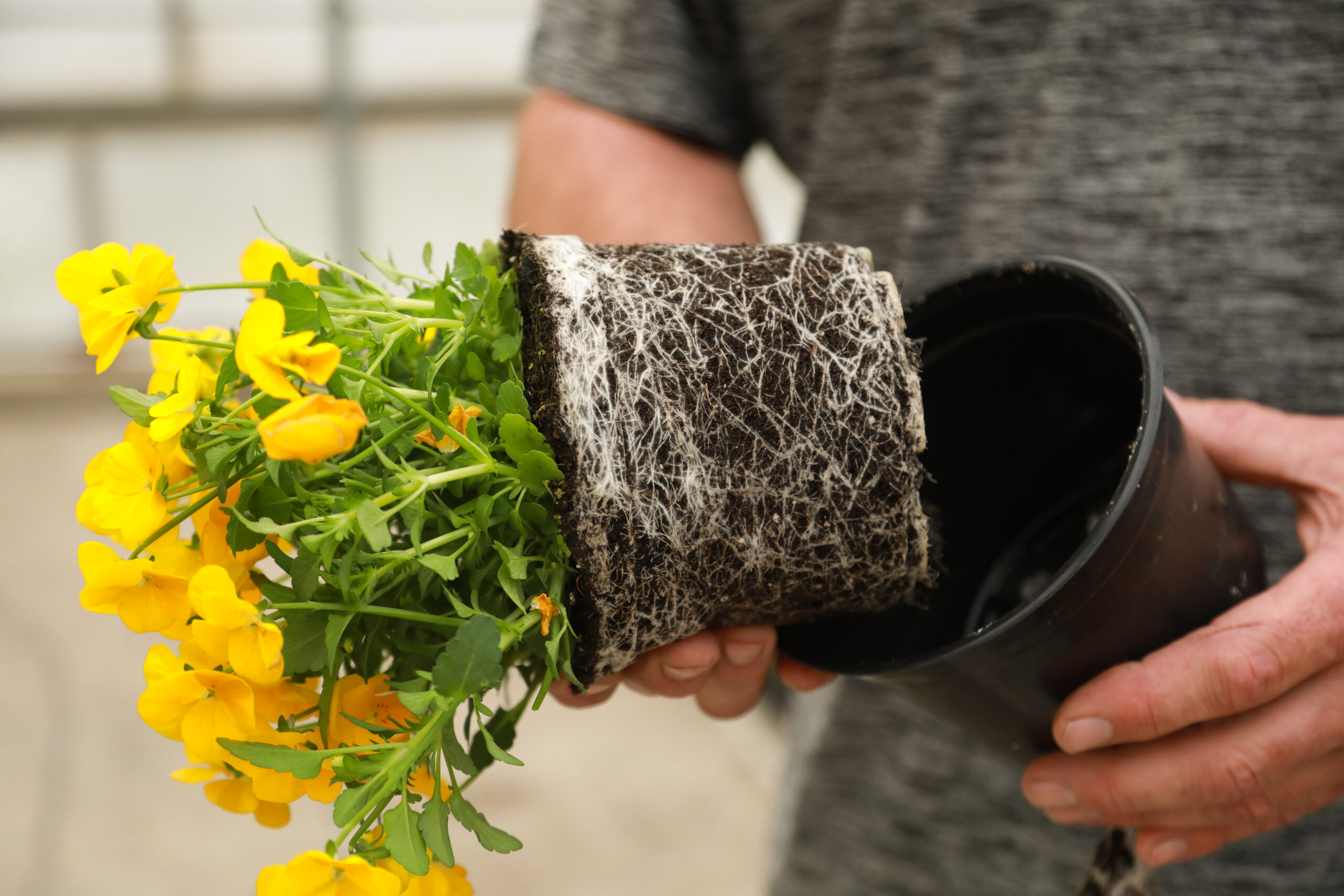
Even with excellent equipment and substrates, issues still arise, with inadequate hydration being the most common. Filling containers dry leads to problems like channeling where irrigation water bypasses dry areas in the container, creating poor root development. Another problem happens when growers compensate for dry filling by overwatering new transplants, trying to expand peat fibers. Unfortunately, this leads to peat expansion inside each pot, at the expense of air space. This occurs when heavy irrigation after transplant collapses the mix, reducing air to roots and leaving containers looking unevenly filled.
Growers must also be mindful of how substrate left in equipment is handled. Leaving unprotected mix exposed overnight leads to moisture loss and variability in the next production. Switching between different mixes without cleaning conveyors and hoppers will also lead to contamination and inconsistent results. Worker safety is an important consideration to also consider. Mixes with many fine particles or brittle components like perlite can produce excessive dust, posing respiratory risks. Simple modifications, like adding baffles or dust shields, plus proper initial hydration, mitigates these issues and improves working conditions.
The Value of High-Quality Substrates
At the heart of all these considerations is the substrate itself. A premium growing medium offers consistent moisture content, stable particle size, and reliable performance across batches. This consistency translates into smoother equipment operation, better hydration, and more uniform container filling. When paired with well-maintained and properly configured equipment, growers achieve optimal yield and efficiency.
In contrast, lower-quality mixes may save money up front but this leads to hidden costs like equipment breakdowns, inconsistent crops, and lost revenue. Investing in a substrate that performs reliably in production systems is not just a technical decision; it’s a strategic one.
Conclusion
Bale processing equipment is more than a mechanical necessity; it’s a gateway to unlocking the full potential of compressed growing media. When properly configured and paired with high-quality substrates, these systems enable greenhouse growers to achieve consistent, high-yield production with reduced labor costs and improved plant health.
Proper hydration, equipment design, substrate quality, and operational scale all intersect in this critical part of the production line. By understanding these dynamics and investing in the right tools and materials, growers can move beyond “how it’s always been done” and embrace a more efficient, profitable future.