November 13, 2026
The Hidden Costs of Making Your Own Growing Media
By Pierre-Marc de Champlain, Director of Product Management, Berger
Making your own growing media may look like an obvious cost-saving move, especially for large-scale greenhouse and nursery operations. Raw ingredients like peat moss, perlite, and bark are available in bulk, and the idea of controlling your substrate recipe is appealing. In practice, though, this decision often proves more costly than it appears. The true cost of producing your own growing media goes well beyond the price of raw materials, and the gap between projected savings and actual results can be significant and misleading.
Before committing to the purchase of mix line equipment, consider the following factors.

What Does It Actually Cost to Make Your Own Growing Media?
Building a business case around ingredient costs alone is a common mistake. Producing a consistent, high-performing growing media requires investment across several categories that rarely appear in early estimates:
- Equipment and infrastructure – bale breaker, hoppers, conveyors, mixer
- Facility space – for production and ingredient storage
- Qualified labor – to operate the line and manage quality controls
- Ongoing training – as staff turns over, skills training and newbie mistakes can be costly
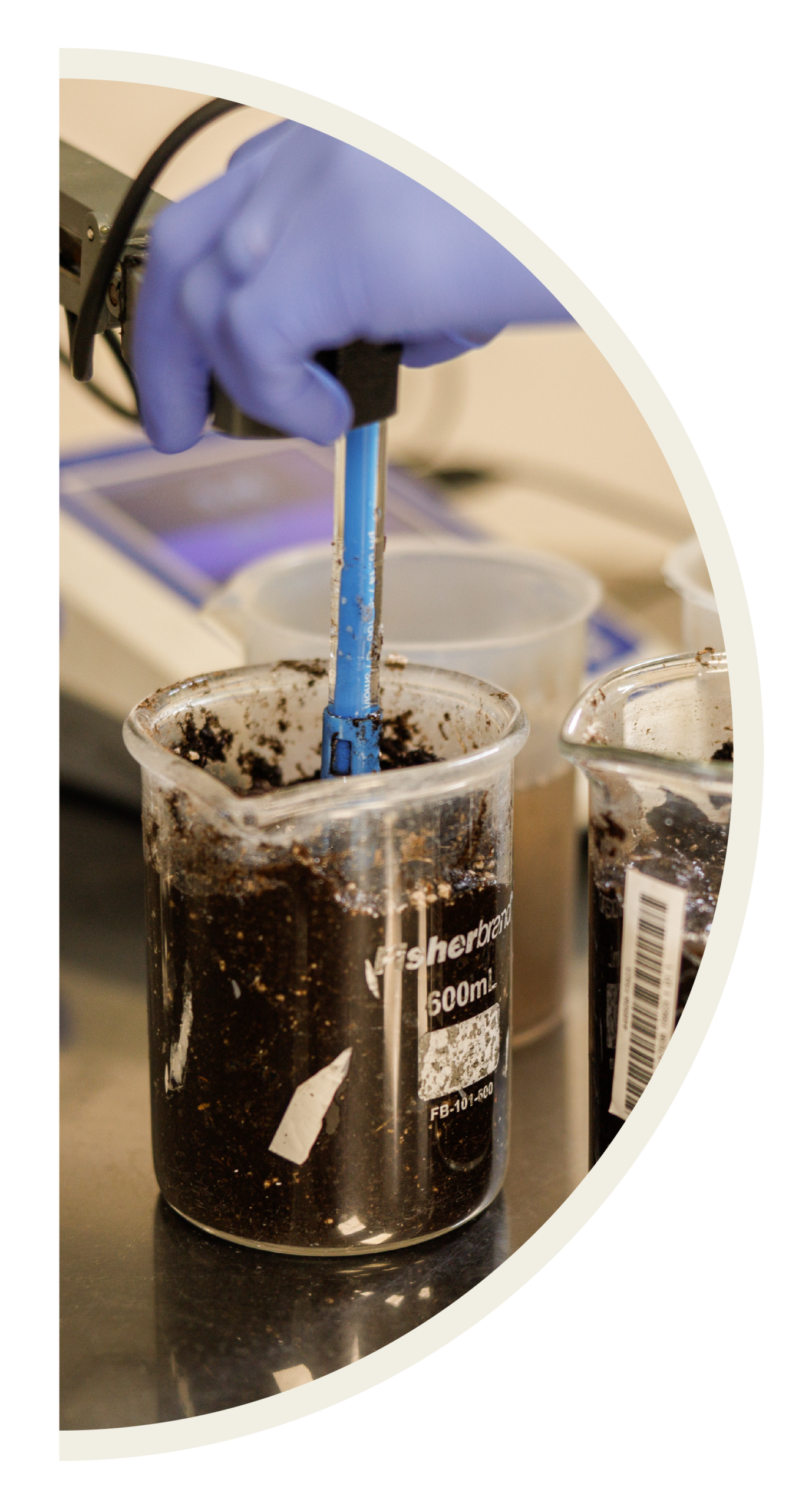
- Quality control systems – and lab testing
- Maintenance and equipment downtime – for every piece of equipment on the line
- Corrective actions – when a bad batch reaches and damages crops
Each of these has a dollar value. Individually, they may seem manageable. Combined, they can easily close, or reverse, the implied cost advantage.
Equipment:
What equipment is required to produce growing media?
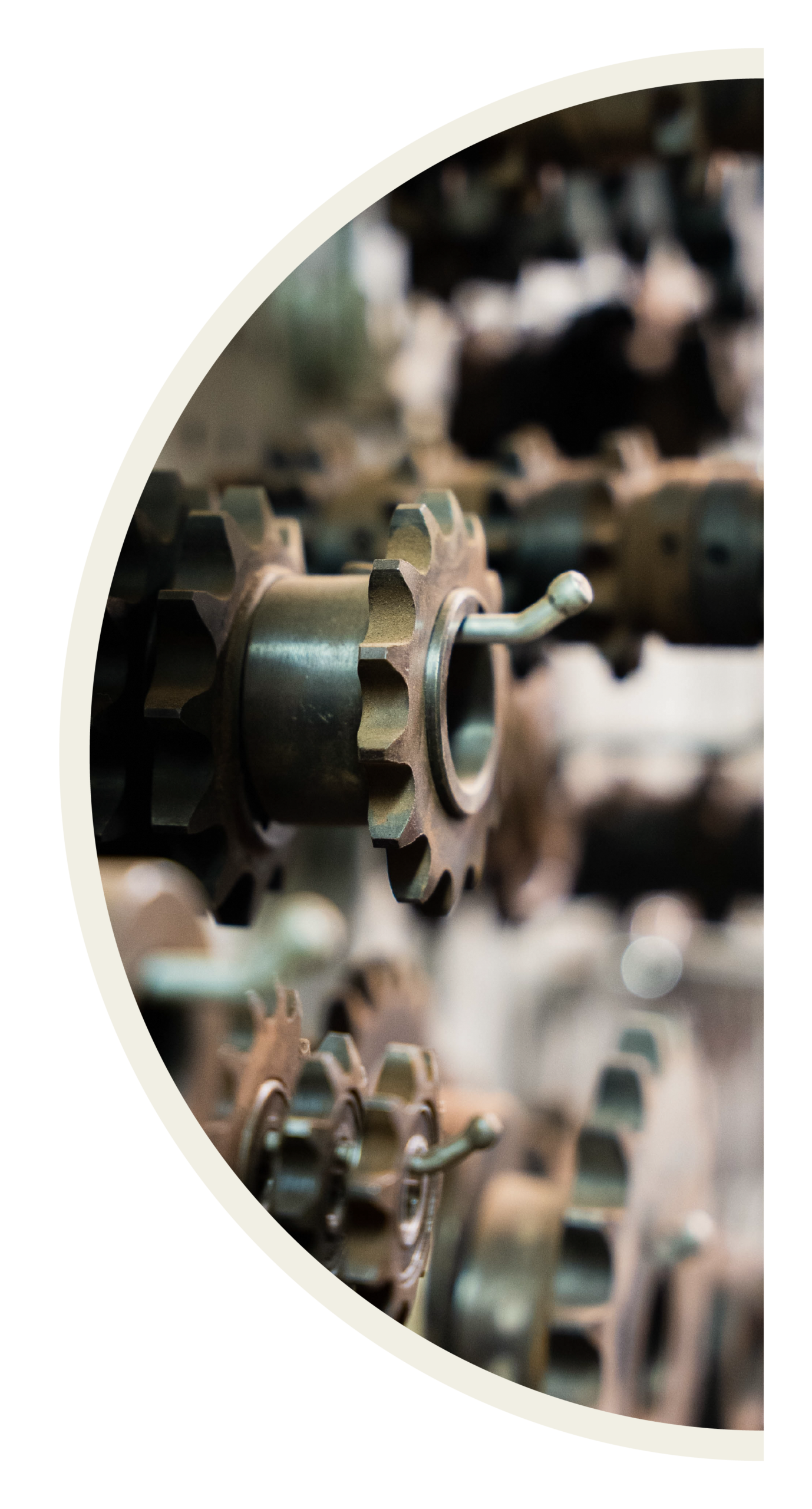
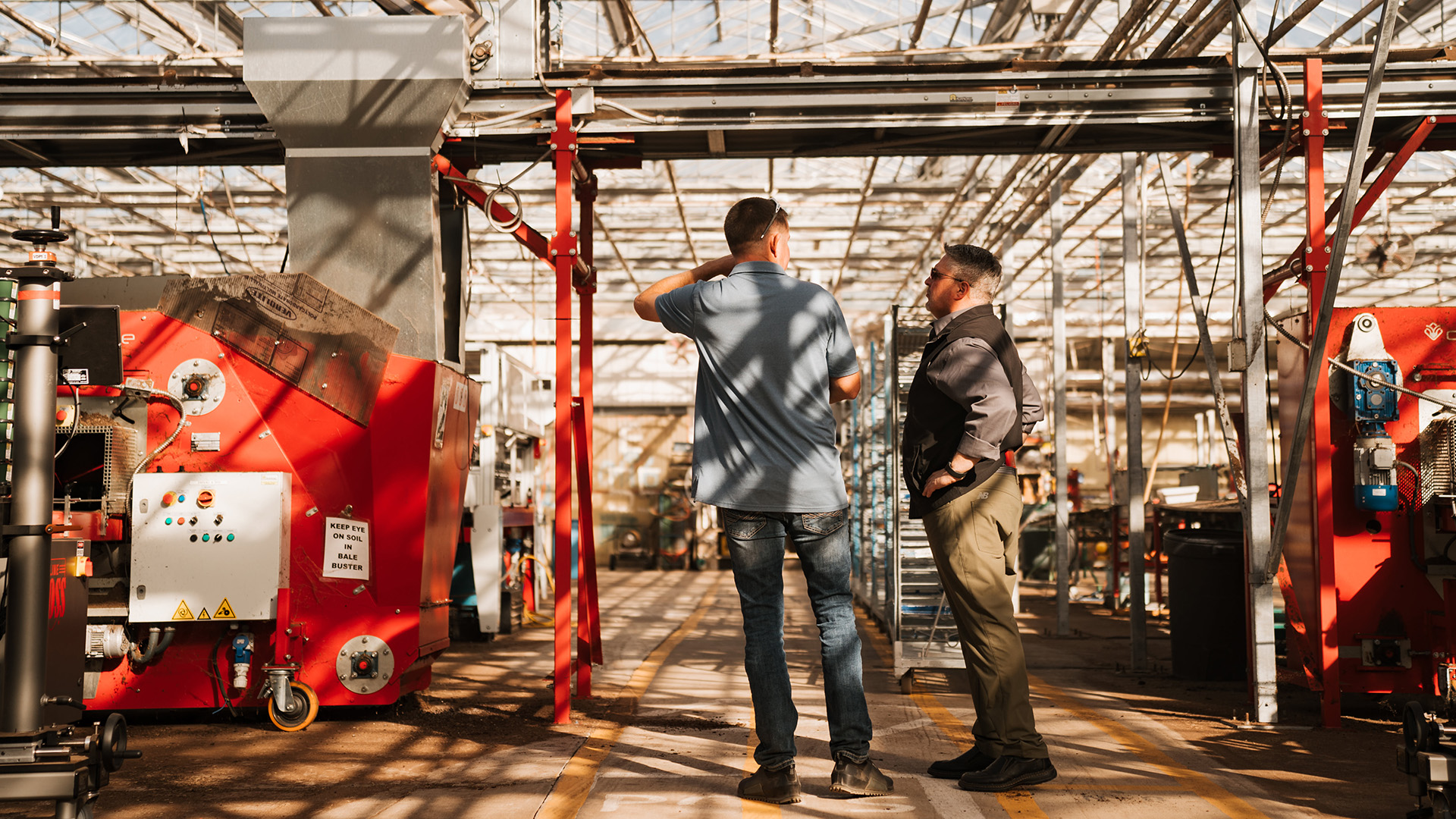
A basic mix line starts with a bale breaker, large hoppers for main components such as peat, perlite, or bark, smaller hoppers for fertilizer and lime, a conveyor system, and a mixer. Professional growing media manufacturers operate with considerably more, like automated dosing systems, sieving equipment for particle size control, mixing tanks for liquid feeds, integrated quality control monitoring, and multiple controllers to ensure batch-to-batch consistency. All that additional machinery exists for one reason: to produce a uniform product that performs predictably.
A proper mix line that does not include these capabilities adds to the overall cost of production and significantly increases the variability of crop performance.
Mixing disc-refined wood fiber, a popular type of wood fiber, costs more due to specialized equipment to fluff and blend the mix. While customization of the ratio of peat to wood fiber is alluring, how will the incorporation rates be determined and checked? Trial and error has a price, too. All equipment requires ongoing maintenance, calibration, and eventual replacement. These recurring costs of more equipment must be factored into any multi-year ROI calculation.
Labor:
Your Most Underestimated Cost
Mixing a quality substrate is a skilled job. Employees need to understand the physical characteristics of each ingredient, how those characteristics shift between deliveries, and how to adjust the recipe in real time according to these differences. They must also operate and calibrate line equipment properly.
Consider pH management. A fixed lime rate does not guarantee consistent pH throughout the production run because natural ingredients vary, impacting buffering chemistry. Furthermore, using two types of lime is the standard in professional mixes. A knowledgeable operator frequently spot-checks pH and adjusts lime rates throughout the process instead of following a recipe card. That level of attention takes experience, and experience takes many seasons to build.
Imagine a hopper runs empty for a few hours before it’s noticed or is improperly calibrated for weeks on end. What is the impact on plant growth? Or consider a wetting agent tank that runs empty unnoticed, or an injector that stops working properly. Which experienced staff are responsible for tracking down the cause of any problem? Each mixing mistake affects crop growth and costs labor to analyze and correct.
When a growing operation produces media for only a few weeks each year, it is genuinely difficult to develop and retain expertise. Staff turnover compounds the problem. Labor costs in North America have increased substantially over the past decade, and all hours spent on mixing, monitoring, adjusting, and troubleshooting carry a real wage cost.
Quality Control:
The Variable That Can Wipe Out Your Savings
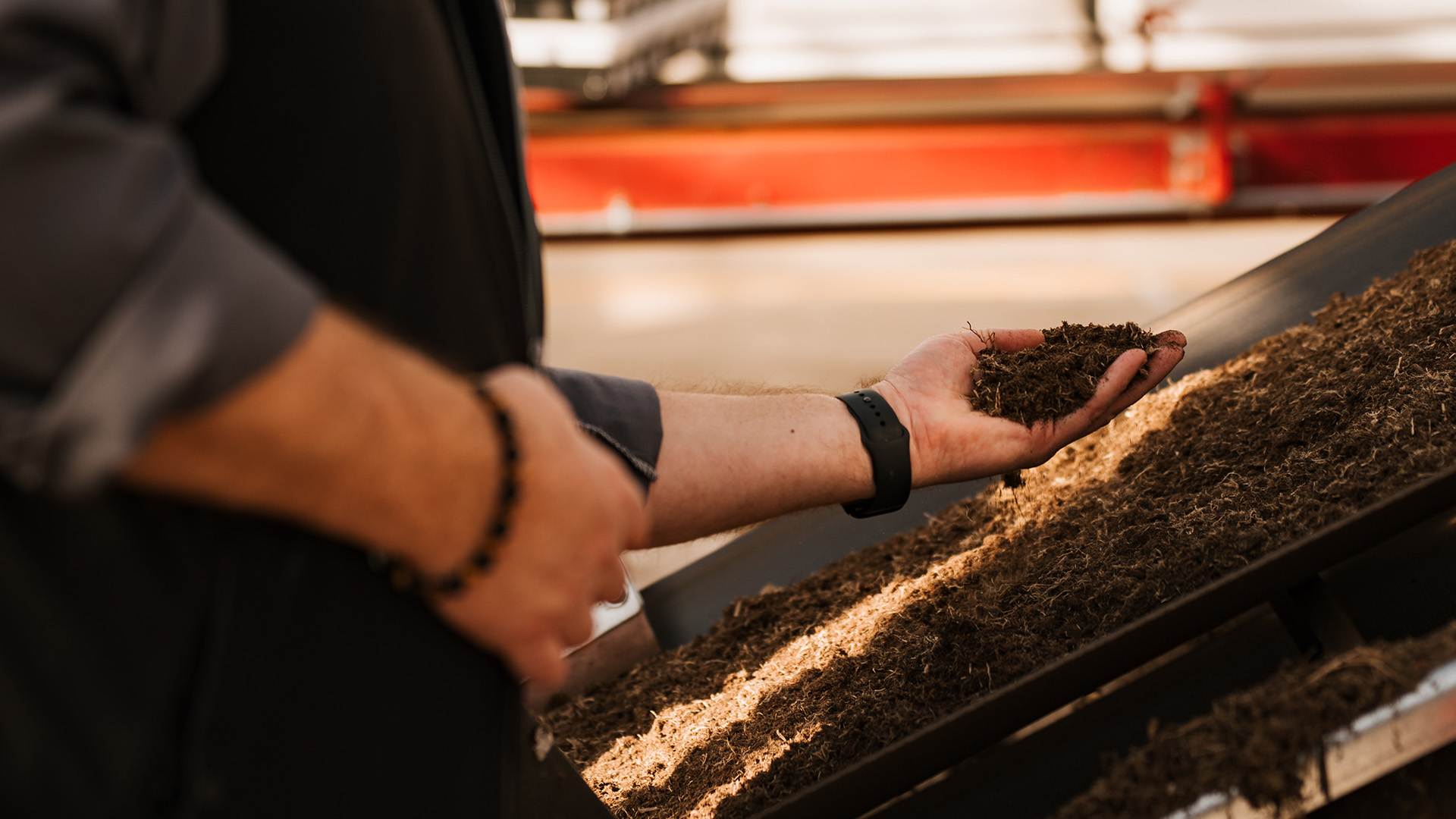
Quality control is another area underestimated during the planning phase. Most growing media ingredients are sourced from natural deposits and harvested materials, which means their characteristics vary from batch to batch and even within a single shipment. A key characteristic to monitor is particle size, because it varies between shipments for many inputs. These differences directly affect air porosity, water retention, and drainage. A mix with finer particles holds more water; a mix with coarser particles dries down faster. Both mix characteristics can exist in the same production run if particle size is not actively controlled.
When the physical properties of your substrate shift, your entire irrigation and fertigation strategy must shift with it. In a crop with a uniform mix, that adjustment applies to every bench. In a crop where substrate variability is present across containers, growers find themselves juggling multiple irrigation strategies simultaneously. This creates an extremely labor-intensive situation, throwing off the entire production schedule. The better, yet more costly, solution is an adjustable sieving system on the mix line, combined with qualified staff regularly measuring particle size distribution at regular intervals and adjusting the screening accordingly. While not a simple operation, it adds meaningfully to both equipment cost and labor requirements to create your own consistent, quality substrate.
Quality control programs for in-house growing media should monitor:
- Particle size distribution
- Moisture content at blending
- pH and soluble salts or electrical conductivity (EC)
- Bulk density
- Wettability
Without systematic monitoring, problems become visible only when crop performance suffers. By then, troubleshooting, root-cause investigation, additional chemical inputs, extra labor, and plant losses can easily exceed any savings from producing the mix in-house.
The Problem of Ingredient Variability
It is tempting to view growing media production as a straightforward blending exercise: add peat, add perlite, add fertilizer and lime, mix thoroughly, without overmixing. In practice, it is far more demanding. Producing large volumes of consistent, high-quality substrate from ingredients that vary batch to batch quickly gets complicated.
Mixing your own substrate can carry many risks, including pathogen introduction, widely variable pH values, and incomplete nutritional packages throughout the duration of your crop. Errors at this stage can force an operation to discard hundreds of cubic yards of substrate, which is expensive at any scale.
Natural ingredient variability also means recipes that worked last season need adjustment depending on new ingredients. Peat structure changes. Bark particle size and pH range shifts. Wetting agent availability varies. Each change requires monitoring and correction.
Multiple Recipes Multiply the Challenges
One advantage of in-house production is the flexibility to produce custom substrates for different crops. But producing multiple recipes introduces a new layer of complexity:
- Production lines must be thoroughly cleaned between batches
- Equipment must be reconfigured and recalibrated
- Finished products need clear, distinct labeling and segregated storage
- Communication between the production supervisor and the growing team must be precise
Each of these steps is a potential point of failure. A professional growing media manufacturer has systems, procedures, and accountability structures built around these transitions. An in-house operation must develop those systems from scratch, while simultaneously managing the rest of the growing operation.
Self-Manufactured vs. Professionally Manufactured:
A Realistic Comparison
One dimension this table does not fully capture: when a professionally manufactured growing medium underperforms, you have recourse. When you manufacture your own and something goes wrong, the accountability and the correction costs rest entirely with the greenhouse operation, on its already stretched budget.
Consideration |
Self-Manufactured |
Professionally Manufactured |
| Capital investment | High | None |
| Labor requirements | High (skilled) | Low |
| Quality control responsibility | Entirely in-house | Shared / supported |
| Ingredient sourcing & logistics | Ongoing | Included |
| Batch-to-batch consistency | Variable | High |
| Maintenance costs | Ongoing | None |
| Accountability if problems occur | Internal risk | Manufacturer risk |
| Technical support | Self-provided | Available as needed |
Frequently Asked Questions
Is it cheaper to make your own growing media?
Not necessarily, and often no. While bulk ingredient costs are lower, the total cost of in-house production, including equipment, skilled labor, quality control, maintenance, and the cost of variability, frequently equals or exceeds the cost of purchasing professionally manufactured media.
Why does particle size matter so much in growing media?
Particle size directly controls the ratio of air space to water-holding capacity in the mix. Finer particles hold more moisture; coarser particles drain more freely and hold more air. When particle size is inconsistent across a production run, it creates variable irrigation needs across your crop, increasing labor, reducing uniformity, and complicating production scheduling.
Can I produce custom blends if I work with a professional manufacturer?
Many professional manufacturers, including Berger, offer a broad product range and can produce customized blends for specific crop requirements. This gives growers access to tailored substrate properties without the overhead of in-house production.
The Big Substrate Decision Worth Getting Right
Growing media’s importance cannot be underestimated. It is the anchor, the very support for each plant. It supplies oxygen to the root zone, buffers nutrients, and directly influences water management throughout the production cycle. The consistency of the substrate shapes how an entire operation runs.
Making your own growing media is a choice that deserves a rigorous, fully explored cost analysis before any equipment is ordered. Account for every overhead item: machinery, ingredients, additives, labor, storage, pre-conditioning, energy, maintenance, quality control, and the cost of corrective action when problems occur. Run the numbers with real inputs, not best-case assumptions. If you are not sure where to start, Berger’s technical team has tools designed specifically to help growers calculate the true cost of in-house production, and to compare it honestly against professionally manufactured alternatives.
Need help evaluating the best option for your production system?
Contact a Berger Grower Advisor to discuss your operation’s specific requirements.

About the author:
Pierre-Marc de Champlain
Director – Technical Services
Pierre-Marc de Champlain is Director of Product Management at Berger, where he has worked for nearly two decades, drawing on a career of scientific research, including soil ecology and food safety research, to support growers with practical, field-tested horticultural solutions. He holds a bachelor’s degree in Biotechnological Engineering from the Université de Sherbrooke.