Growing media for strawberries grown under different production systems
Author: John Bergman, grower advisor
As strawberry cultivation advances within CEA and covered systems, so does the requirements for a soil-less growing medium that can optimize both water and nutrient uptake, while also keeping plants healthy. To be clear these are strawberry plants that are not directly grown in the field/ground and include the production of strawberry transplants as well as production, fruit bearing crops.
Strawberry cultivation requires a combination of precision, care, and advanced techniques to consistently produce high-quality fruit. At Berger, our research into growing media and water management has provided important insights into optimizing strawberry production, particularly within soilless systems. In this article we will review our findings when we compared strawberry production in different growing media including mixes of coir, peat and wood fiber.
The Advantages of Soilless Cultivation
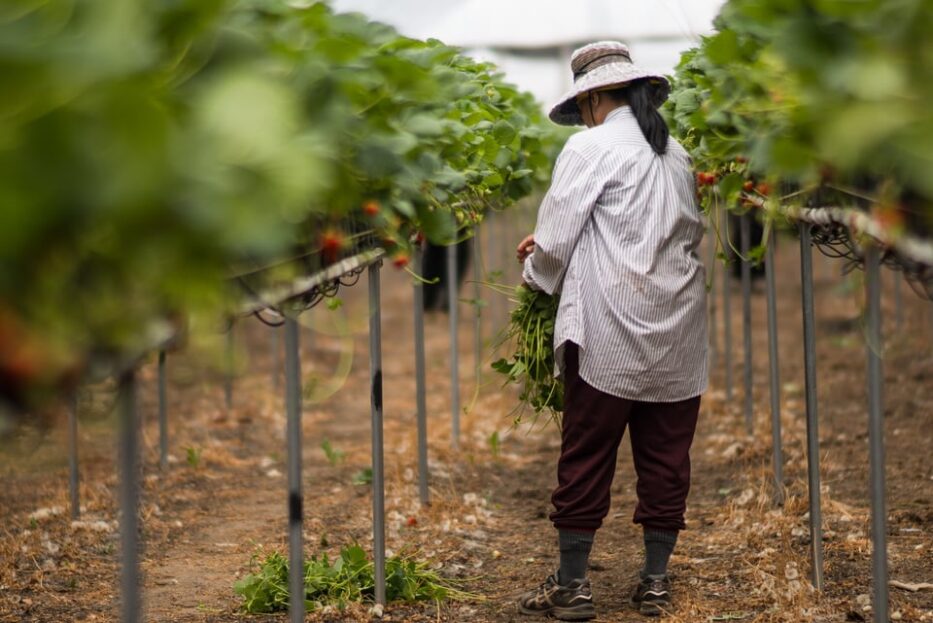
Let’s first look at how soilless growing systems can offer advantages for strawberry production, providing growers with greater control over environmental variables and enabling cultivation in diverse settings. Advantages include:
- Expanded Growing Areas:
growers can cultivate strawberries in regions that are unsuitable for traditional field farming. - Enhanced Operational Efficiency:
Growers can now utilize more ergonomic systems such as waist-high benches, helping to reducing physical strain. - Superior Fruit Quality:
Gain more control over fruit firmness, flavor, and shelf life. - Improved Disease & Insect Management:
Reduce risks associated with soil-borne pathogens, promoting healthier crops with less pesticide applications.
The Role of Growing Media
For strawberries to thrive, their unique physiological needs must be met, which includes selecting the right growing media. Berger’s research highlights the following key characteristics that are essential for optimal growth:
- Chemical Balance:
A low electrical conductivity (EC < 2 mS/cm) and a narrow pH range (6.0–6.2) are critical for proper nutrient uptake and plant health. - Root Support:
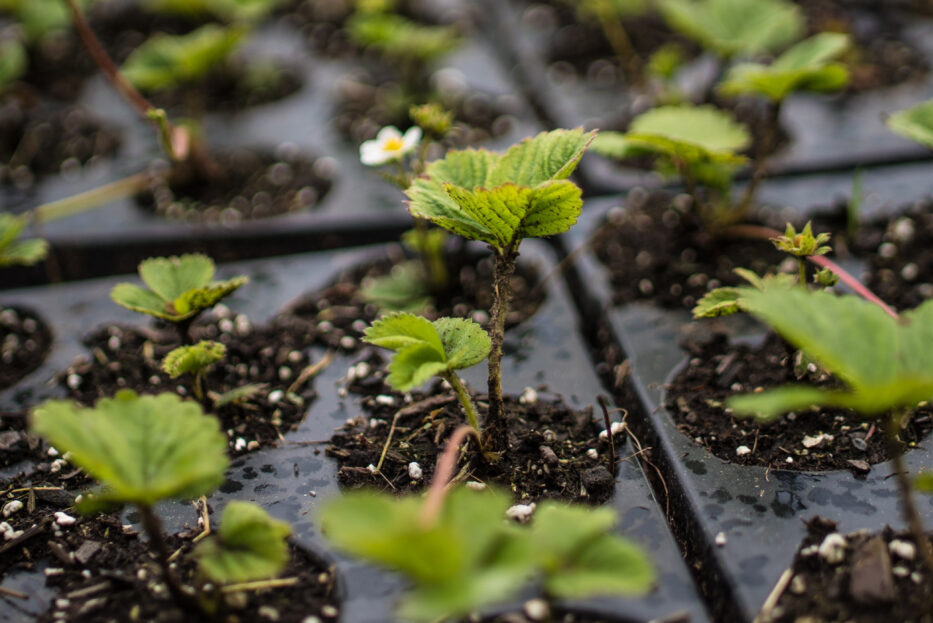
The shallow, fine roots of strawberries need excellent contact with the growing medium for healthy root development. - Air Porosity:
High porosity ensures proper root aeration, enhancing both fruit yield and quality.
Results from Berger’s Growing Media Trials
In our trials, a variety of growing media were tested to evaluate their suitability for strawberry cultivation. Our research into growing media and water management, with a focus on the popular cultivar Albion, provides valuable insights into optimizing soilless strawberry production across various systems. Berger’s greenhouse trials tested several growing media combinations to assess their impact on strawberry performance.
- Peat-Wood Fiber-Coir (60:25:15):
This blend demonstrated strong performance, delivering high yield, large fruit size, and an excellent Brix index. - Peat-Wood Fiber-Perlite (60:25:15):
Another high-performing blend that offered consistent aeration and moisture retention, ensuring optimal root growth and fruit development. - Coir (100%):
While coir provided good performance in some trials, it was outperformed by peat-based blends in terms of yield and fruit size. - Peat-Coir-Wood Fiber (40:40:20):
This combination provided excellent water retention and stability, yielding high-quality fruit with a balanced flavor profile.
Berger Growing Media |
Yield (g/plant) |
Berry Weight (g/fruit) |
Brix (°) |
| BM5 Natural Fiber & Aggregate – Wood Super HP Peat:Wood Fiber:Perlite (60:25:15) | 1075 | 14.5 | 7.2 |
| BM4 Natural Fiber – Wood & Coir HP Peat:Wood Fiber:Coir (60:25:15) | 1033 | 14.0 | 7.3 |
| BM4w Natural Fiber – Coir HP Coir 100% | 1030 | 13.8 | 7.2 |
| BM4w Natural Fiber – Wood & Coir HP Peat:Coir:Wood Fiber (40:40:20) | 991 | 13.5 | 7.5 |
The trials demonstrated that peat-based growing media often outperform coir alone, with peat’s ability to support a higher air porosity and better water retention leading to improved results in both yield and fruit quality.
Water Retention Curve: Understanding Media Performance
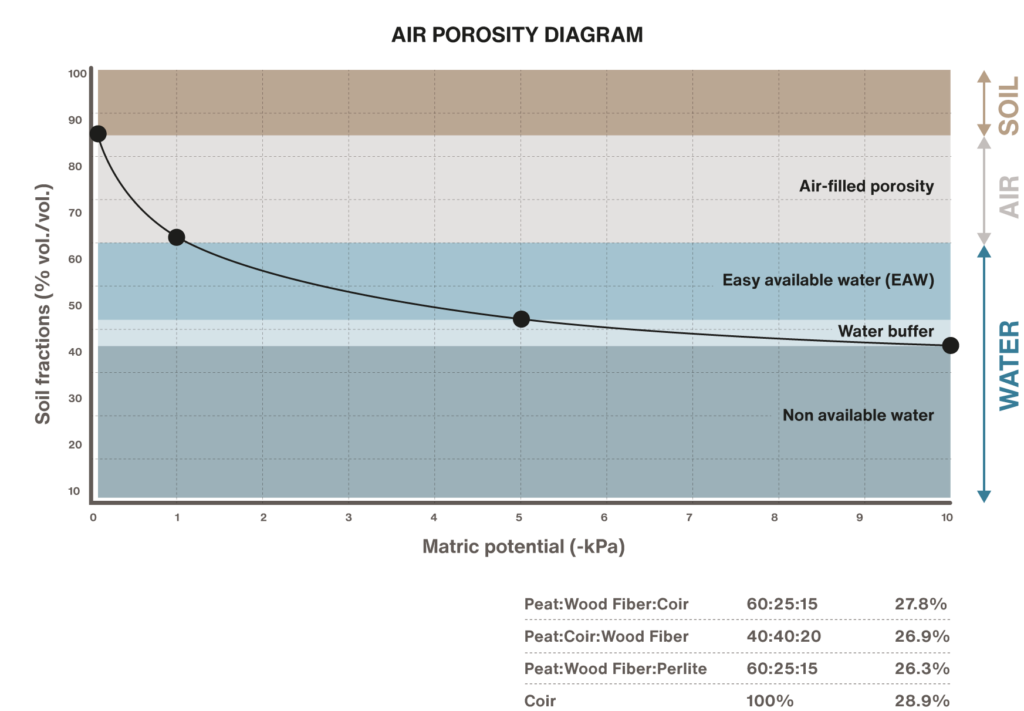
A water retention curve describes how much water a growing medium holds at varying levels of matric potential (the tension at which water is held within the medium). This data is essential for tailoring irrigation strategies to match the unique properties of each medium. Berger’s trials measured water retention across different media blends, revealing distinct dynamics:
- Peat-Wood Fiber-Coir (60:25:15):
This blend showed excellent water-holding capacity, maintaining optimal moisture levels without over-saturation. It provided consistent hydration for the shallow, fine roots of strawberries. - Peat-Coir-Wood Fiber (40:40:20):
The higher coir content in this blend resulted in superior water retention, ensuring steady moisture availability. - Peat-Wood Fiber-Perlite (60:25:15):
Featuring higher air porosity, this mix allowed rapid drainage while retaining sufficient moisture, making it ideal for environments where overwatering is a risk. - 100% Coir:
While coir held significant water at higher matric potentials, it risked over-saturation in wetter conditions, requiring more precise irrigation management.
Implications for Water Management
The water retention curve data highlights the importance of tailoring irrigation strategies to the specific properties of the growing medium:
- Media-Specific Triggers:
Tools such as tensiometers can help growers monitor matric potential and adjust irrigation schedules accordingly. - Dry-Down Strategies:
Gradual drying between irrigation cycles, ensures optimal root health and minimizes stress during key growth phases. - Disease Prevention:
Maintaining proper moisture levels can mitigate the risk of water-borne diseases.
Key Takeaways from Berger’s Research
Berger’s research trials demonstrated that peatbased growing media containing fiber or aggregates deliver equal or superior performance compared to a 100% coir mix. These media delivered higher yields, larger fruit sizes, and improved sugar content while maintaining optimal air porosity and water retention.
For strawberry growers looking to optimize production systems, Berger offers tailored solutions backed by scientific research.
To learn more about how Berger’s growing media solutions can help elevate your strawberry production, contact us for expert advice and recommendations.